A Short Link Asks Your Reader to Trust Something They Can’t See
Published on by
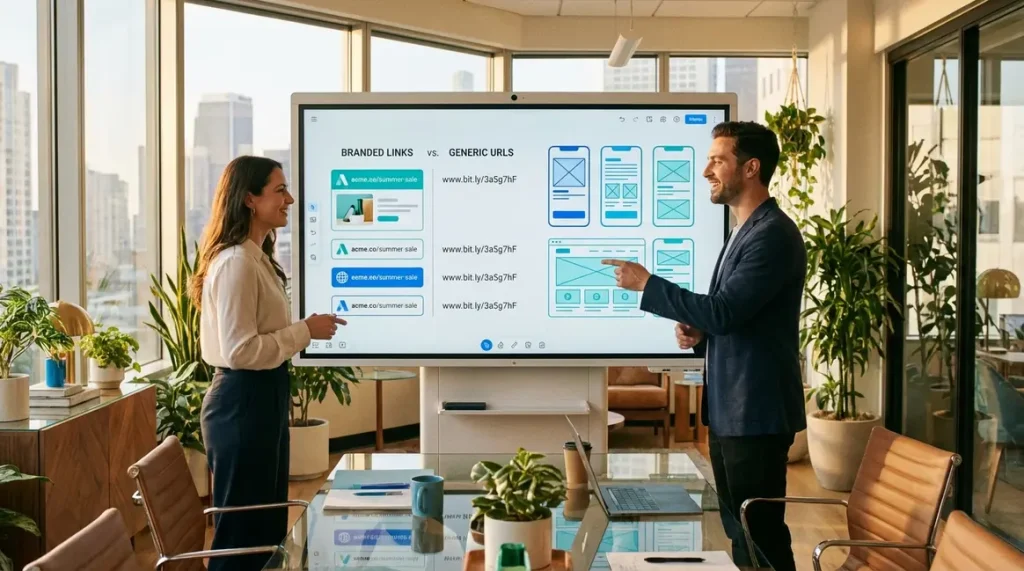
This looks like a small thing. It isn’t.
When a newsroom posts a link, it is making a claim. The claim is: this goes where we say it goes, and we stand behind what’s on the other end. That claim is the entire reason anyone clicks a news link rather than ignoring it.
A generic short link quietly removes the evidence for the claim. The reader sees a domain that belongs to a shortening company, a slash, and six random characters. Nothing in it says which newsroom sent it. Nothing says where it lands.
Ten years ago that was fine, because nobody was worried. It’s less fine now.
The provenance problem
Readers have spent the last several years being told, correctly, to be careful about what they click. Phishing training at work. Warnings about misinformation. A general sense that a link from an unfamiliar source is a small risk.
All of that training points the same direction: look at the domain before you click.
So a news organization that distributes through a generic shortener has put itself in an odd spot. It has asked readers to be careful about provenance, then handed them a link with no provenance in it. The reader who follows the advice is the reader least likely to click.
This lands harder on newsrooms than on most businesses. A retailer’s link that looks slightly sketchy costs a sale. A newsroom’s link that looks slightly sketchy costs credibility, which is the whole product.
What a branded domain actually does
A branded short domain is your own domain doing the shortening. The Seattle Times uses st.news. WBUR uses wbur.fm. WLRN uses wlrn.us.
Look at those for a second. Each one answers the provenance question before the reader has to ask it. You know who sent it. You know it’s a news organization. You know it isn’t a stranger.
The link is the same length. The click is the same click. The difference is entirely in what the reader can verify at a glance, and that turns out to be most of the decision.
There’s a second benefit that matters more over time. You own the domain, so you own the redirect. If you ever leave your shortener, the links keep working because you point them somewhere else. Newsrooms have archives measured in decades. A link that dies when a vendor contract ends is a small piece of the archive going dark.
What to look for
Most shorteners treat a custom domain as a premium feature, which is worth knowing before you start comparing. A few things separate the useful setups from the ones that will annoy you in six months.
Check whether the plan actually includes a custom domain, and at what tier. This is the most common place people get surprised, because the entry-level paid plan often doesn’t include it.
Check what happens to your links if you stop paying. Ask directly. The answer should be that you keep the domain and can redirect it yourself.
Check whether anything gets inserted between the click and the destination. Interstitial pages and ad units on a click path are common on cheaper tiers, and on a newsroom’s link they read as an endorsement you didn’t make.
Check what the analytics actually report. Country and city are standard. If your coverage area is smaller than a city, and for most local newsrooms it is, city-level data won’t answer the questions you care about.
The part most people skip
Getting a branded domain is the easy half. Most newsrooms that set one up stop there, and then use it for years without ever looking at what it’s telling them.
The domain solves trust. It doesn’t solve measurement. You still end up with a click count and no sense of where those clicks came from, which for a newsroom accountable to a specific place is the more interesting number by a wide margin.
If you’re going to do the work of setting up a branded domain, it’s worth picking a tool that reports geography underneath it. Otherwise you’ve improved how the link looks and learned nothing new about who’s on the other end of it.
blrb.ai supports custom aliases and reports every click at the zip code level with Census data attached. Built for people who need to know where their audience actually is.